Saturday, March 27, 2010

Get ready, get set, ALU!


Photo: Students from GPS Matamaka, Lape, and Nuapapu sprinting towards the finish line.

We just wrapped up a successful Outer-Island Sports Day at the neighboring village of Nuapapu on Friday, March 26, 2010. In Tonga, “Sports Day” only happens once a year. It is an event where all the GPS schools come together and compete in athletic events such as: relays, tug of war, potato sack races etc. Unfortunately, the outer-island schools generally do not get to participate with the rest of the schools in town. As a result, the outer-island schools have created their own Sports Day. It all began last year when GPS Matamaka hosted the first ever “Outer-sland Sports Day Invitational.” The only participant was GPS Nuapapu. The event was a huge success that GPS Nuapapu hosted the event this year. GPS Lape was the newest member to participate this year.

Photo: The opening ceremony of Sports Day with all of the participating students.

The students of GPS Matamaka have been training for Sports Day for the last three weeks. Ma’asi, Soane, and I have been busy teaching the students the best techniques in potato sack racing, spoon racing etc. It has been a blast working out with the kids for one to hours after school with various cardio and stretching exercise. They have all worked really hard and it has paid off tremendously.

We all left Matamaka around 8:30 AM for Nuapapu via boat. The event was scheduled to begin at 9:00 AM, but in Tongan time it really means 10:30 ish. After the prayers were done and welcome speech from the Nuapapu town officer, the games finally commenced. I was in charge of the finish line and handing the top three winners their “ticket” to be given to the official score keeper. All of the other teachers helped with the starting line or organizing the next event. Surprisingly, the entire event went very smoothly. I anticipated some sort of disorganization of some sort to arise, but I underestimated the event organizers too soon.


Photo: Action pics from Sports Day.

My favorite events would have to be the tug of war and potato sack races. GPS Matamaka ended up beating both schools at the tug of war and the students were absolutely ecstatic about it! On the other hand, Nuapapu overall did a better job with the potato sack races; however, it was priceless to watch all of the class one to three students race for the finish line. They were so cute with their little hops and big smiles.

Photo: GPS Matamaka with the before and after picture of the tug of war event. You can see it in their faces how bad they wanted to win the event. It was absolutely priceless.

Although GPS Matamaka received second place overall in the Nuapapu Sports Day Invitational (off by a mere four points), the students competed very well and showed great sportsmanship. It did not really matter who won or lost during Sports Day. In the end, everyone was a winner for participating and giving their heart out for all of the events. Next year GPS Matamaka will once again host the Outer-Island Sports Day Invitational. We will have a DJ and invite GPS Ovaka. As a result, that would complete all of the villages in the immediate surroundings around Matamaka. GPS Matamaka, Lape, Nuapapu, and Ovaka will be the four schools that will hopefully take part in the 2011 Outer-Island Sports Day.

Photo: We are the champions. GPS Matamaka after the closing ceremony.

Friday, March 19, 2010

Big Fish

(The other fisherman with Lopini who caught this monster fish!)

I was in class two weeks ago when one of the local fisherman, Lopini, ran up to the school asking me if I could possibly take a picture of a fish he just caught. Luckily, I really wasn't really doing much at the time and heck, why not?

It was not until I made it out to the beach and realized how massive this fish was! Lopini had caught a huge billfish that morning with another fellow. The entire village was super excited with this catch and everyone came to wharf in order to see it for their own eyes. This fish was a monster! It really looked like it could eat three or four of my little primary school students. Everyone took turns with the camera and the fish. I was the photographer and it was very amusing to see each person pose next to the fish.

Lopini took the fish to the market to be sold. It ended up to be 151.7 kg or about 300+ pounds! Surely, he made bank that day. I still cannot imagine how this fish was swimming just around my village. The sea is starting to become really active with these bigger animals coming out lately. Just a couple of weeks ago, a pair of dolphins swam next to our boat from Neiafu to Matamaka. It was very much a scene from movies, but it actually happened in real life. They were jumping and enjoyed all the attention from the people on the boat. In addition, I also a huge turtle one time. It was the same size as the boat I rode! Man, I cannot even imagine when the humpback whales are back in town. The next few months are going to be very exciting! I will try my best to have my camera with me when whale season begins.

(Lopini on the far left with his mother Vahena, neighbor Una, fiefakau Eisi, and baby William)

Thursday, March 18, 2010

They are actually growing! What? Our beautiful school garden!


(PHOTO: GPS Matamaka kids checking out the seedlings from our school garden).

Who would have thought I might actually be a decent farmer? My co-teacher, students, and I have been working on our school garden for the past month. We finally finished clearing a substantial amount of land next to our school. The owner of the plot of land was nice enough to let us start a school garden for free. It has taken about two weeks to clear all rubbish and old roots from our garden area. In the past three weeks, we planted some seeds to make some seedlings and it has been growing at a ridiculous pace!

The seeds that we planted were all donated from the US thanks to Candi DeCarlo of Harlan, Iowa. Our goal this year has been to experiment which crops grow the best on the type of soil available on our island. So far we have planted: tomatoes, lettuce, spinach, peppers, corn, watermelons, potatoes, pumpkins, cucumbers, and onions. We plan on expanding with: cantaloupes, eggplants, carrots, potatoes, and local crops such as: bananas, papayas, and vanilla beans. Every day the garden continues to expand as more seedlings have been transplanted to a more permanent location. We have been very lucky that the perimeter fence has kept all the unwanted animals from entering into the garden area. Pigs in Tonga have been known notoriously in ruining vegetable gardens!


(PHOTO: The boys water the plants every day after school and then search for mangoes with the rest of the kids afterwards.)

The students have been responsible in clearing most of the land and watering the seedlings every day. They all seem to enjoy being involved with the project. The students have been very intrigued with the new crops such as the pumpkins and cantaloupe. Overall, the majority of the villagers have been impressed with how fast the crops have been growing. Many of them had doubts that anything would grow on the piece of land that we had to work with. As a result, we have been asked numerous times if we will be sharing all the crops with the villagers. We have not really decided how we will distribute the crops yet, but we will probably try to divide it with all the students' families. If there are any extra we will distribute it evenly to the rest of the villagers.

What is the next stage of the GPS Matamaka garden? If our luck continues to a successful harvest in a few months, I hope to expand the project with the youth group of Matamaka. The Matamaka youth has a nice piece of land outside of the village that is currently not being used. My co-teacher and I will help coordinate with the youth to implement a large scale garden/farm with more fresh produce. The Matamaka town officer already has our approval for the expansion next year. In addition, I will be contacting the Vava’u Youth Congress to learn more about their greenhouse gardens in Neiafu and how GPS Matamaka can build a small scale garden at the island. Furthermore, there have been several ideas about starting an egg farm at Matamaka. I heard through the “coconut wireless” that this has been one of the more successful Peace Corps in the past. I will start researching more information about this and hopefully secure some international funds/grants with all of the agricultural endeavors in Matamaka.


(PHOTO: Planting sweet corn in our school garden and Ma’asi with the corn three weeks later.)

In the end, everything has been going very well in Matamaka. If any readers out there want to contribute to the school garden and future youth garden, please do not hesitate and let me know. More seeds of any variety are always welcome so please send them our way. I will keep everyone up-to-date with any progress and photos of the GPS Matamaka garden in the future. Malo ‘aupito!

Thursday, March 4, 2010

Feleti can actually conjure up a delicious meal? Bon appétit!


(PHOTO: I actually roasted a pig. I could not get myself to kill the little guy though. Sorry pig).

For all of those people who know me from back home, you would know my very limited cooking skills. I always justified my habitual eating out or ordering in as supporting the local economy. Well, it has been a wake-up call since I arrived in Tonga. Unlike Amelika, Vava’u does not really have fast food restaurants or deliveries. I would consider this next two years as an excellent opportunity to improve my culinary skills (eeks).

Prior to arrival in Matamaka, I was always given food from my host families or I indulged myself in one of the abundant eateries located around Nuko’alofa. When I arrived in Matamaka I learned to adapt to my new environment and lifestyle. Man, life has been so different without a refrigerator! Fresh produce only last about a week, along with white bread from the market. Anchor box milk only lasts for twenty-four hours and forget about butter and ice cream.

It took me about three weeks to figure out which food works best in my outer island. For example: if I want cheese, skip the gouda or cheddar and instead buy Chesdale (box cheese that does not refrigeration) or buy brown bread instead of white, because it has a longer shelf life. Butter has been tricky, but I learned to buy frozen butter right before I catch a boat. Then wrap it in plastic and place in water. It prevents the butter from melting right away. These have been some examples of preparing meals in the outer islands.


(PHOTO: My first attempt of baking oatmeal raisin cookies. I do not know where I went wrong? Lol.)

To this day, I would not say I have perfected or mastered my newly discovered culinary skills, but I can definitely say I have improved dramatically. In Matamaka, I have prepared some delicious vegetable curry and rice, pepperoni and supreme pizza, fried rice, omelets, fresh pesto pasta (with chopped nuts and everything), spaghetti, banana breads, brownies, cookies, vegetable stir-fry, and the lists goes on. My co-teacher Ma’asi has been my guinea pig and so far I have not had any complaints with my cooking. My neighbors always enjoy it when I bake brownies and cakes. One of my techniques with “integrating” in Matamaka has been to bake goods and then giving them out to all of neighbors. I would say I have covered half of the town (at the time of writing). Today, every time I eva-pe (walk around) people are always asking what I will be baking next (the Tongan way of asking “when are you going to bring us some brownies?”) Eventually, I will get around to all twenty-five or so families in Matamaka. I am just lucky it is not a very large village, because that would be a lot of cakes and brownies.


(PHOTOS: Yum, my delicious Matamaka Supreme Pizza and banana bread with M&Ms and banana nut bread).

In the end, I am really happy with the progress I have made with my cooking skills. I feel that I am eating healthier than ever in the outer island than my life in America. The biggest difference has been the quality of food I am eating at Matamaka. Literally all the vegetables are fresh and organic! Furthermore, most of the breads and pasta I have been eating are made from scratch. Everything is so fresh! Back home, if I were to cook some spaghetti, I would easily just buy a jar of tomato sauce and be done. In Tonga, I make my own tomato sauce with fresh everything! I know right, you do not believe me. I guess you all would just have to come and visit and try it for yourself!

Hmmm…I wonder what I should cook next time?

Sunday, February 28, 2010

Saving lives one breath at a time, the Tonga Red Cross and Matamaka.


(PHOTO: Group photo of all the participants at the TONGA RED CROSS workshop in Matamaka.)

CPR or puhi manava (in Tongan) and First Aid have been the main topics in Matamaka during this past week as the Tonga Red Cross and I worked together to certify twenty-four men and women from Matamaka and neighboring outer-island villages. The event was part of a four day workshop that took place at three separate outer-island villages around the Vava’u island groups. The villages of Matamaka, Otea, and Hunga were the villages that hosted this event. Members from the outer-island communities were invited to attend the free community first aid and CPR workshop. At the end of the workshop, every participant received a certificate for the successful completion of the Red Cross training.

I was very lucky to have been involved with the Red Cross. A woman by the name of Kato, a Tonga Red Cross community outreach coordinator of 34 years, approached me in Matamaka and asked if I would like to help out. I could not believe she would even ask, of course I would love to help out! It just happened to turn out that I had a CPR dummy from Peace Corps with me at my house. What awesome luck eh? As a result, I assisted Kato with the CPR training portion of the workshop.


(PHOTO: Doing my thing...)

The entire CPR training was very informative to all of the participants. They asked many questions and had the opportunity to practice CPR on one of the three CPR dolls at the event. Surprisingly enough, the Tongans made the entire CPR practice comical with their rambunctious (however sometimes inappropriate) jokes ("sio mahaki?"). Furthermore, I found it very amusing when we had problems removing the lipstick stains off the CPR dolls. All the participants dressed up at their best for certificate ceremony, which included bright red lipstick with most of the women.


:


(PHOTOS: Both men and women took turns practicing CPR on the dummies.)

After a couple rounds with the CPR dummies and a review of all the topics covered that week, the presentation of certificates commenced. All of the participants were very proud of their new certificates, as well as the completion of the workshop. The event ended with a kai pola (feast) with everyone involved. The food was delicious and we all had a great time. The community members were very appreciative with the entire program. I would consider the event as a complete success. About an equal amount of men and women attended the event. It has been a comfort to know that important lifesaving skills have been shared to the people on the outer-islands, where modern health care has been non-existent.

I look forward to be involved with future Tonga Red Cross community initiatives on the outer-islands of Vava’u. In addition, I hope to be an excellent resource for first aid and CPR for all those interested in my community until the end of my Peace Corps service. My next objective will be to work with GPS Matamaka students and staff with first aid/CPR and to continue addressing various healthcare issues on the outer-islands.


(PHOTO: Kato and I after the presentation of certificates. She was off to the village of Hunga next with her workshops.)

Wednesday, February 17, 2010

CYCLONE RENE = Sleepover at Mormon Church for four days and three nights…


(PHOTO: The kava/church hall of the Church of Tonga in Talau.)

My first real tribulation in Peace Corps Tonga has been the infamous Cyclone Rene. Cyclone Rene, a category-four cyclone, first made its presence in Tonga over the Niuas late Saturday evening on the 13th of February. It later made its appearance on Valentine’s Day in Vava’u after continuing its southerly path towards Ha’apai, Tongatapu, and ‘Eua late Monday. The cyclone made substantial damage throughout the Kingdom as power, water, and other essential services have been knocked out for days. However, power and other amenities have been slowly getting back online since the brunt of the storm passed last weekend. In Tongatapu, air travel was suspended for Monday and the most part of Tuesday as the main power grid that connected the international airport was severely damaged from the storm. Similar situations have been apparent with the rest of Tonga’s island groups.


(PHOTO: Down power lines, a very common scene throughout Neiafu.)

In relation to the situation in Vava’u, as of Wednesday evening the 17th of February, most of the power in central Neiafu and its neighboring villages have been restored. Tonga Power Limited has been overhauling extra hours to quickly restore power to the rest of the main city as well as the outer villages in the main island. Cyclone Rene knocked down hundreds of trees and power lines. In addition, several buildings suffered significant damages; particularly those who did not take extra precautions prior to the arrival of the storm. For the most part, the majority of the population boarded up their windows and received minimal damage to their property. Fallen trees and raised roofs have been a very common sight around Vava’u. Luckily, there have been no reported deaths in the Vava’u island groups.

**** ****

As for myself, the entire ordeal began Friday when I arrived by boat to Neiafu around noon. I had the intention to purchase some fresh vegetables from the market and then catching an afternoon boat back to Matamaka. Everything was going as planned until I received a phone call from PC headquarters in Nuko’alofa warning me of the approaching cyclone and the prohibition of anymore sea travel until further notice. In awe with the new revelation, I realized I was in no way prepared for an event such as a “consolidation” right at that moment. I only had the clothes that I had on with no opportunity to go back to my island grab my sleeping bag, some extra clothes, and other essential items. Luckily, I always carry my important documents and laptop with me every time I leave the island in case something like this was to happen. I did not even thing about closing my windows since I was only going to be gone for three hours! Fortunately, I ran into my principal who was returning to the island and I asked to please prepare my house for an imminent cyclone which was madly approaching Tonga.

Anyway, the official “consolidation” orders came in mid-afternoon Saturday. All the PCVs met at the Mormon Church near Mormon high school in Kameli. Surprisingly enough, it was a beautiful sunny day. I was very appreciative that my Tongan family supplied me with a small foam mattress, sheets, and a pillow for the entire consolidation party. They were very sympathetic when I told them that I would just sleep with a lavalava (sarong-ish cloth) and my bag as a pillow for the next couple of days. Remember I did not have the opportunity to bring anything?! Regardless, I was very grateful for their thoughtfulness. They even went as far as to bring me food when the storm was not at its peak. I was never more excited to see lu sipi (taro leaves with sheep, baked in an ‘umu) after eating peanut butter and jelly crackers days. My Tongan family definitely made our little house arrest at the Mormon Church a bit more relaxing for me.

(PHOTO: The scene outside the Mormon Church before Cyclone Rene made her appearance.)

The weather finally started to turn sour late Sunday afternoon. It started with the sun setting and filling the skies with a bright yellow/orange tint (something that would not be seen for a couple of days) before the dark eerie clouds penetrated the mountains surrounding Vava’u with a mean wind that only amplified as the night progressed. Electricity was short-lived after the initial storm bans of Rene made its presence loud and clear. I had a few decent laughs with some of my PC friends in Ha’apai via Digicel until the towers went offline. The “No Network” message seemed to have plagued everyone’s cell phone.

There were many concerns about our safety with our consolidation point for the Vava’u group. The room where we were placed had windows in two sides of the room. To make matter worse, a line of coconut trees with hundreds of coconut projectiles had a perfect aim on our wall of glass windows. We were lucky the windows held up for the entire duration of the Cyclone. Furthermore, we had a perception that our consolidation point would have access to drinking water, a kitchen/cooking facility, and showers. Guess what? Nothing! Someone really should pick a better spot next time. I ended up showering using a small fire hose over a drainage pipe. I was desperate for a shower after wearing the same clothes for almost four full days.

(PHOTO: An outdoor kitchen damaged in Talau.)

Cyclone Rene left Vava’u Monday morning. We were shocked we still had to stay at the Mormon Church for an extra night. It may have been windy in Tongatapu, but Vava’u had clear skies for once. In spite of everyone running short on water, we technically did not have clearance to leave the building. It was a bit frustrating, but we tried to make the best of it. Later that Monday evening, we played hide and seek and some other games around the Mormon compound. The electricity was still out so the entire place was honestly quite creepy. Joseph Smith, is that you hiding in the corner? (Fakakata pe). Tuesday morning finally came around and we were given the clearance to leave the Mormon compound. Finally! We were all getting very restless after being in a confined room for so long.


(PHOTO: The house of the church leader from the Church of Tonga in Talau)

Cyclone Rene left with trail of destruction in certain parts of Vava’u, but it could have been worse. For the most part, the more modern buildings weathered pretty well. Only the most decrepit buildings fell-ill with Rene’s winds. In Talau, the kava/social hall for the Church of Tonga was completely destroyed. Unfortunately, the faifakau’s (church minister) house had a similar fate. In addition, my family’s peito (outdoor kitchen) roof was blown off completely. The same thing happened around the area. In relation to Matamaka, I only got cleared to take a boat back Wednesday afternoon; however, there were no boats at the wharf. I hope to go back as soon as possible and check on my house. I have been told that overall my house has survived the storm, but my pit toilet has blown away. In addition, a section of the school wall had supposedly collapsed. I will see for myself as soon as I get back. I will write an update the next time I can use the internet again.

Until next time, ‘ofa atu!

-Feleti

SMILE GPS Matamaka!

PHOTO: GPS Matamaka students getting ready to brush their teeth!

On behalf of GPS Matamaka and Peace Corps Tonga, I would like to send a big thank you to Broadway Dental and Rich and Cheri Bockelmann of Denison, Iowa for their generous donations of twenty-five children toothbrushes and six toothpaste tubes to the children of GPS Matamaka. The children were super excited to get their new toothbrushes for the 2010 school year. As a high school graduate of the class 2005 of Manning High School, it has been great to receive some support from others in Western Iowa during my twenty-seven months Peace Corps service in the Kingdom of Tonga.
I emphasized the importance of dental hygiene with the twenty students of GPS Matamaka. Each student brought a plastic bottle to keep their toothbrush in for the whole year. The students all wrote their names on the bottle to make sure no one uses another student’s toothbrush. I started the morning lesson with questioning students who actually brushed their teeth that morning. Only two students raised their hand. Consequently, I asked them all if they know why it was important to brush their teeth every day. After explaining what candies can do to your teeth if you do not brush regularly, most of the students were very eager to brush their teeth and fight cavities!

(PHOTO: Class 1 to 3 students)

The rest of the lesson took place outside where students filled their water bottles with water and rinsed their new toothbrush. Before giving each student some toothpaste, I told them all that they should sing the ABCs in their head while they are brushing their teeth. So, we all practiced humming the ABCs while pretending to brush our teeth. After a couple rounds of the ABCs, they were finally ready to brush their teeth!

It was very amusing to watch the students in class one to three brush their teeth. As each student sung their ABCs, toothpaste was getting all over their little faces and their newly washed school uniforms. OAIUE! (Tongan phrase for “Oh, man!” in English). Following a couple of candid photos, we all rinsed our mouth and headed back to the classroom. I ended up sending three to five of the younger students to the bathroom since toothpaste was still all over their faces.

(PHOTO: A picture after humming our ABCs)

In the end, we all had a good time and the students all loved their new toothbrushes! We will continue the “SMILE GPS MATAMAKA” program everyday for the rest of the school year. Students will brush their teeth in the morning before the flag ceremony and also after lunch. My principal and co-teacher were very impressed with the outcome of the successful event. Once again, I want to give a BIG thank you to all of those to help make this happen in our very small outer island school. Thanks to their contribution, there are more healthy smiles in Tonga! The children all send a huge MALO ‘AUPITO!


(PHOTO: GPS Matamaka 2010, all the class one students went home already by the time we took this photo.)

***If any readers want to help contribute/support to any current and future projects at GPS Matamaka, please feel free to contact me. We are always looking for more philanthropists to help improve the overall well-being of the students and the community of Matamaka and Tonga. ‘Ofa atu!

Friday, February 5, 2010

For real what are you? Piliphine? Pisikoa? mei Amelika? Mo’oni?

Photo: My host brother from Ha'apai and I before culture day at Faleloa

If I could only get a pa’anga for every time someone would ask me if I am really an American, I would be a very rich person here in Tonga. Since my arrival here in the Kingdom, I have had an internal struggle to keep my cool every time my identity/ethnicity is questioned. As anyone can imagine, a very small country like Tonga has a very limited amount of exposure with diversity from around the world. You are either a Tongan or a white palangi (foreigner), but a brown palangi? What is that?

The truth is that I was born in the Philippines and I grew up pretty much my entire life in America (hence, how I am a Peace Corps Volunteer). One of the Peace Corps goals is to “share the American culture to the people of other cultures,” (or at least something like that). Well, as the only “colored” person in Peace Corps Tonga Group 75, I have the lone duty to share America’s diversity here in Tonga.

Some of my encounters with people in Tonga (both palangi(s) and Tongans) have had their ups and downs. Most of them have accepted my “dual” identity; while others cannot get over the fact that I am not a white pisikoa from America; therefore, I must be a JICA (Japanese) volunteer. On the other hand, some recognizes me as a Filipino who lives in America, but not American? I am often introduced as, “this is the pisikoa from the Philippines.” Anyway, thanks to the numerous famous Filipino soap operas, I have not been perceived as a negative thing in Tonga (at least I hope to think so). After introducing myself to new people, I am automatically tested for the authenticity of my “Filipino-ness” by questions such as “Piliphine eh? How do you say ‘hello’ in the Philippines?” or my favorite “Do you have any Piliphine faiva(s) (movies)?” It is such a bummer that I did not think to bring some with me; because I have SO MANY at home (sense my sarcasm?). Peace Corps should have written “Filipino soap operas” with my packing list for Tonga. I would have been much more prepared and be well integrated to the Tongan culture sooner.

Since it is not a perfect world and I did not bring any Filipino soap operas with me, I have been busy explaining who I am and where I come from with everyone I meet. It has been quite exhausting, but I feel that my small village has accepted me and get it. I have definitely been sharing Goal #3 of the Peace Corps. Believe it or not, there are brown people from America! Wow, really?! In addition, we have Obama as president and he is black. Technically he is half black and half white, regardless he IS AMERICAN. Who would have thought there are colored people from America? That is so weird…

In the end, I have learned to feel more confident and comfortable with myself and my “unique” background/ethnicity here in Tonga. I do not blame the curiosity of Tongans for their awkward questions or assumptions about me. It is good that they know the truth or the mo’oni. The more it happens, the less it continues to bother me. It is partly why I am here right, to share the American culture of today? On the contrary, I do not tolerate ignorance from other palangi(s). Is it alright for me to be upset after a palangi from another western country to come towards me and ask me “what are you?” without even saying a “hello” or “hi, how’s it going?” I forthrightly find it rude and not the best way to start a conversation with a stranger. Do I have to be from a certain place to have the privilege to have conversation with these people? IKAI MALO PE OR NO THANK YOU in English. I can say it in Spanish, French or my natal tongue too if they prefer? I am a proud Filipino-American. If you cannot accept that, please do me a favor and kiss my @ss. I am here to stay.

Friday, January 29, 2010

Foki ki ako! Back to School at GPS MATAMAKA!

(Photo: GPS Matamaka students class 1 to 3, we are making goblin faces)


DING DING DING! The sound of the empty propane tank (aka the school bell) echoed throughout the village on Monday, January 25 as it officially announced the commencement of the 2010 school year at GPS Matamaka. I have been waiting for this week to finally come for the last month, because I can actually start to “work” at my site.

My co-teacher (Ma’asi) and I returned back to the island right after planning week in Neiafu. It was nice to be back and retreat to one of the nearby beaches around my house since it has been ridiculously hot the past two/three weeks. However, the last three days have been windy and rainy, but it has made the temperature here very pleasant (plus we really need the rain). Anyway, members of the PTA have been very busy preparing the school property for the year. The lawn has been neatly trimmed and all the rubbish was disposed of from the school yard.

The first day of school first started out with all the students lined up in front of the school and Tongan flag. Just like any event here in Tonga, we have our opening prayer which was shortly followed by the Tonga national anthem. We have a total of 16 students this year! It is a big number right? We may have a couple of stragglers still coming next week, but for the most part that is everyone from class one to six. We were originally anticipating around 25, but some families moved to Neiafu or elsewhere around the area. The students were priceless when I watched them all line up with their little red and white school uniforms singing their national anthem. My new goal has been to get the Tongan anthem memorize so I too may sing along with them.

My principal/head teacher of Matamaka is teaching classes four to six, while Ma’asi teaches classes one to three. If you have not figured it out already, GPS Matamaka has multi-level classrooms. I will be observing both classes for the next two or three weeks so I can get an idea of where students stand with their English language. In addition, I have been busy trying to get the library up and running. The work has mostly been reorganizing the books, due to the fact that there has been no form of organization system at all in the past. All the books seem to have been placed randomly on the book shelves. On the contrary, the library could use some more books for the children. Most of the books have been donated by yachters who visit the school, so if anyone is reading this and would love to help contribute the English development of children in Matamaka, please send us some/any used or new books. There are other projects floating around the school that I am starting to work on. The biggest and most important has been trying to figure out the solar panels. I am still looking into some missing wires and equipment, but I hope to figure it all out soon so we can get some computers online at the school.

One of the highlights of my week has been with the Ma’asi’s class one to three class. I was trying to teach them new and different animals from around the world. I drew various animals on the blackboard such as a pig, a giraffe, and an elephant. After having the students say the animals in English and Tongan, I asked them what sound each animal made. Everyone knew what the sound of a pig and elephant were. When it came to the giraffe, Ma’asi and I just looked at each other because neither of us really knew what sound a giraffe made! Ma’asi ended up just making some random sound that could only be described as a somewhere in between a “meow” and a “baaaa.” The poor children believed us and were making the giraffe sounds all morning. Note to self; make sure you know the sound of every animal you plan on using for a lesson.

In the end, everything has been moving along quite dandy. I am starting to adapt to the outer-island lifestyle (which is even slower than the rest of Tonga believe it or not). One day this past week I thought I was running really late for school. It was 8:25 and school starts at 8:30, so I did not finish my morning coffee or weet-bix and just left school. It turned out that I was too early! I guess you can say we run on a different time schedule out here in the outer-islands.

These have been all the new developments at GPS Matamaka. I will post some new photos of our library soon after I make it beautiful with decorations and student’s art and crafts! If anyone has any questions regarding GPS Matamaka, Vava’u, Tonga, or me, please do not hesitate on contacting me! Malo ‘aupito.

‘Ofa atu

-Tongan boy.

Friday, January 22, 2010

Back to school, Mount Talau, and everything in between in Vava’u


The school year is just around the corner for all the primary and secondary students in Tonga. I have just spent the last week preparing with my principal and co-teacher in Vava’u High for uike plani or planning week. I have been really looking forward to this week, because I will soon finally have a “real” schedule. The last month has been pretty much dedicated to getting to know my community and familiarizing myself with Matamaka and Vava’u in general.


With all that said, planning week was not what I expected it to be. It was very counter-productive due to several reasons. First of all, the Ministry of Education of Tonga failed to deliver the educational materials for the primary schools prior to planning week. As of Wednesday this past week, I was told the books were still waiting to be shipped from Nuko’alofa. School only starts this upcoming Monday, so what is the rush Tonga? Next, teacher attendance for uike plani gradually became less and less as the week progressed. Furthermore, the meetings were scheduled to begin at 8:30, but in Tonga time this usually means 9:30. As a result, only a handful of individual were actually present when important announcements were being made in the beginning. Lastly (the one thing that absolutely drove me crazy), the breaks in between sessions throughout the week lasted from forty five minutes to an hour and a half. It literally was time being wasted. Teachers and staff just sat around and chatted. It was not until 2PM came around when someone finally came up to the closing prayer before everyone left. Correct me if I am wrong, but would it not be easier to just get everything done and over it so we could leave sooner rather than sitting around and prolonging a schedule as long as possible? In the end, uike plani is over! Going back to my island this weekend and getting ready for classes to begin at GPS Matamaka.

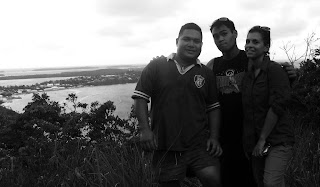
On a more positive note, I finally had the opportunity to hike Mount Talau with a fellow Peace Corps volunteer and my co-teacher (after my first real busy week in Tonga). It was a great hike and the view from the top was amazing. Mount Talau is the second highest point in all of Vava’u. From the top, you are able to see the Port of Refuge and the city of Neiafu looking beautiful like usual. In addition, you can actually see a small portion of my island of Nuapapu from the distant. The entire hike up from the “dirt road” to the top took about twenty to thirty minutes. It was not a bad hike, so I definitely recommend it if anyone is in the neighborhood to climb to the top. Check out some of my pictures of the view from the top.

Peace Corps Group 75 had an orientation workshop at the Vava’u Youth Congress this past Thursday and Friday. It was great to see some of the administrative staff from Tongatapu in Vava’u. I was a bit skeptical about the objectives of the workshop, but I was proven wrong! I felt that the entire event was very informative and helpful to both my Tongan counterpart and I. I guess I was just so traumatized from how the sessions were done at Pre-Service Training (PST) that I had assumed that this past workshop would be presented in a very similar fashion, but that did not happen. In addition, the meals and tea times for the entire event were quite scrumptious (thanks to the kind generosity and excellent food preparation of the Wesleyan school).

Lastly, we had an opportunity to do a meet and greet with the governor of Vava’u. I was particularly happy with this because he was my first Tongan noble that I had the chance to meet in person. I decided to wear a more traditional Tongan/tapa shirt for the occasion. After everyone went to introduce themselves and shared a little bit about their interests of developmental projects in Vava’u, it was finally my turn and of course I was last. I spoke in Tongan and shared a little information about me. Directly after that, the governor quickly said and I quote “Oh, I thought you were Tongan.” Ahh, life is too great. Whoever said a palangi can never be a real Tongan? I still have a long time here in Tonga, so who knows how I will turn out after the next 23 months. I will leave this blog with that. I am off to my motu. Please stay tune for my next update from down here in the Kingdom.

‘Ofa atu

-Tonga boy